

Home


The Basel ‘Villa dei Casoni’ Research Project
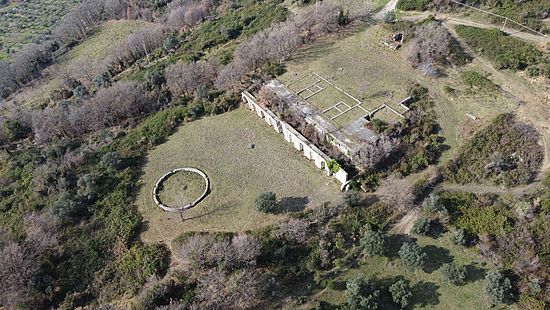
Welcome to the Villa dei Casoni Research Project, an interdisciplinary initiative led by the Institute of Ancient History (PI: Sabine R. Huebner) at the University of Basel, which investigates the environmental and archaeological history of a Roman rural estate in central Italy. The villa is located in the Sabina, a historically rich and agriculturally significant region northeast of Rome, known since antiquity for its olive groves, grain production, and pastoral economy. The site offers a unique case study for understanding the long-term interaction between human societies, land use, climate change, and agricultural transformations from pre-Roman times through late antiquity.
While often overshadowed by Rome itself, the Sabina played a crucial role in the economic and demographic structure of central Italy. Traditionally associated with the Sabines, a people deeply intertwined with early Roman history, this region became fully integrated into Rome’s economic and political sphere by the late Republic. The Romans established numerous rural estates (villae rusticae) in the area, serving both as centers of agricultural production and as retreats for the elite. Villa dei Casoni, with its commanding view over the Tiber and Farfa valleys, exemplifies this development. However, like many estates in central Italy, it experienced significant changes over time, particularly in the second century CE, when shifting climatic and economic conditions reshaped agricultural strategies across the region.
The project combines archaeological surveys, environmental analysis, and historical research to reconstruct how the villa functioned within this evolving landscape. By studying land use, water management, and agricultural change, we seek to shed new light on the sustainability of Roman rural economies and their long-term environmental impact.
We extend our gratitude to the Commune of Montopoli di Sabina represented by its mayor, Andrea Fiori, as well as the Soprintendenza Archeologia, Belle Arti e Paesaggio for the Metropolitan Area of Rome and the Province of Rieti, represented by Francesca Licordari, Diana Raiano e Nadia Fagiani for their support. We also thank the University of Basel and the Max‑Geldner Foundation for their generous support.